Skip to product information
1 of 14

Cheetahstand

Cheetah Stand 12x55 Strip Softbox

Cheetah Stand 12x55 Strip Softbox

Regular price $169.00 USD
Regular price $159.00 USD Sale price $169.00 USD
Sale Sold out

The Cheetah Stand 12x55 Strip Softbox is a 12 by 55 inch modifier that provides beautiful and even rim light or long and even highlights on edges of any subject. Long enough to cover full body shots and big enough to be used as a narrow main light.

Featuring the Quick Release System, the Cheetah Stand 12x55 Strip Softbox can easily deploy similar to an umbrella while providing output that is exactly the same as traditional soft-boxes.

The exterior is a tough, flexible material that is tear-resistant and water-resistant and the Cheetah Stand 12x55 Strip Softbox comes equipped with 2 layers of diffusion. Each Cheetah Stand 12x55 Strip Softbox includes an egg-crate 2in x 2in x 2in, you will have extreme control of your light spread.

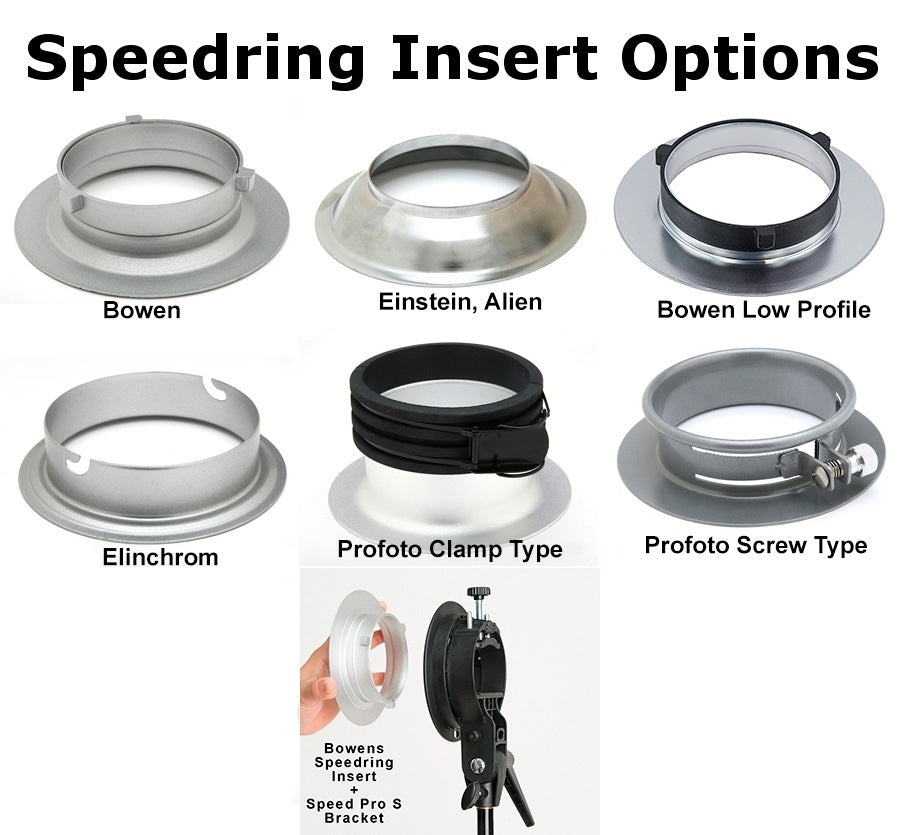
All Cheetah Stand 12x55 Strip Softbox are Bowens compatible for Godox and Westcott strobes while Profoto, Alienbee and Elinchrom speed rings allow them to be compatible as well.

Key Features of the Cheetah 12x55 Strip Softbox:

  • Innovative Quick Release Setup: The Cheetah 12x55 Strip Softbox uses an Umbrella Style Design for Quick Setup and Teardown.
  • Egg-Crate Grid: Cheetah 12x55 Strip Softbox includes the Egg-crate grids for minimum light spread.
  • Speed Rings: Compatible with many of the industry strobes from Godox to Profoto.

Dimensions:

Weight with accessories attached: 2.12 lb
Weight with bag: 3.11 lb
Length (when expanded): 54.75 in
Width (when expanded): 11.5 in
Depth (when expanded): 20 in
Folded length: 33.5 in
Folded width: 7 in

Includes:

1 Cheetah Stand 12x55 Strip Softbox
1 Carrying bag
1 Front diffuser
1 Inner diffuser
1 Eggcrate Grid


Frequently Asked Questions

Cheetah Stand 12x55 Strip Softbox FAQ
A strip softbox is a rectangular light modifier designed to produce a long, narrow, and even beam of light. It's an essential tool in softbox photography because it helps to create soft, diffused illumination, minimizing harsh shadows and providing a more flattering look for your subjects. Unlike bare flashes or umbrellas, a strip softbox offers precise control over the direction and spread of light, making it invaluable for a variety of photographic styles, especially when you need to highlight edges or create a separation between your subject and the background.
2. How does a strip softbox differ from other types of softboxes (e.g., square, octagonal)?
The primary difference lies in their shape and the quality of light they produce. Square and rectangular softboxes offer a broader, more even spread of light, ideal for general illumination. Octagonal softboxes, often called "beauty dishes," create a more circular catchlight and are favored for portraits due to their wrap-around light. A strip softbox, by contrast, creates a very elongated and narrow light source. This unique shape allows for specific lighting techniques like rim lighting, hair lighting, or creating a subtle gradient across a background, making it a specialized softbox for light shaping.
3. What are the main benefits of using a strip softbox in portrait photography?
In portrait photography, a strip softbox is incredibly versatile. It excels at creating dramatic rim lighting that separates your subject from the background, adding depth and dimension. It can also be used as a hair light to add a subtle sheen and highlight texture. When placed vertically, it can create a beautiful, elongated catchlight in the eyes, which is often more appealing than the round catchlight from other modifiers. Its ability to create a narrow band of light also helps in sculpting the subject's face, emphasizing contours and adding a professional touch to your softbox photography.
4. Can a strip softbox be used for product photography, and if so, how?
Absolutely! Strip softboxes are highly effective in product photography, especially for long or reflective items. They are excellent for creating long, even reflections on shiny surfaces, which can enhance the perceived quality of the product. By positioning a strip softbox along the length of an item, you can achieve beautiful highlights and define its form. For example, when photographing a bottle, a strip softbox can create a smooth, elongated highlight that accentuates its curves. This precise light control makes it a perfect softbox for lighting challenging products.
5. What is grid and how does it enhance the functionality of a strip softbox?
A grid, or honeycomb grid, is a fabric accessory that attaches to the front of a softbox. It consists of a series of small cells that restrict the light spread, making the light more directional and controlled. For a photography softbox, especially a strip softbox, a grid is invaluable for minimizing light spill and preventing unwanted light from hitting your background or other parts of your scene. This allows for more precise lighting of your subject, creating a more dramatic and focused effect, and is crucial when you want to achieve specific lighting patterns.
6. What are the best practices for positioning a strip softbox for optimal results?
The optimal positioning of a strip softbox depends entirely on the desired effect. For rim lighting, place it behind and slightly to the side of your subject. For hair light, position it above and behind the subject. For full-body portraits, placing it vertically to the side can create a flattering, even illumination. Experimentation is key in softbox photography. Pay attention to the shadows and highlights it creates and adjust its distance and angle from your subject to achieve the look you envision.
7. Are there different sizes of strip softboxes, and how do I choose the right one?
Yes, strip softboxes come in various lengths and widths. The right size depends on your subject and the space you're working in. Longer strip softboxes are ideal for full-body shots or for creating a very long, continuous highlight on products. Shorter ones are more suitable for headshots, waist-up portraits, or when space is limited. Consider the size of your subject and the desired spread of light when selecting your photography softbox. Generally, a longer softbox will produce a softer light on a larger area, while a shorter one will be more focused.
8. Can I use a strip softbox with both continuous lighting and strobe lighting?
Absolutely! Strip softboxes are designed to be compatible with both continuous lighting (e.g., LED lights, fluorescent lights) and strobe lighting (e.g., studio flashes, speedlights). The mounting system typically involves a speedring that connects the softbox to your light source. Ensure that the speedring you purchase is compatible with your specific light's mount (e.g., Bowens mount, Elinchrom mount). This versatility makes the strip softbox for light shaping an excellent investment regardless of your preferred light source.
9. How do I assemble and disassemble a strip softbox for easy transport?
Most strip softboxes are designed for relatively quick and easy assembly and disassembly. They typically involve inserting flexible rods into designated pockets on the softbox fabric and then attaching them to a speedring. Disassembly is the reverse process, allowing the softbox to fold down into a compact carrying case, making it highly portable for on-location shoots. While the initial setup might take a few minutes, with practice, it becomes a routine part of your photography softbox kit.
10. What is the impact of diffusion panels on the quality of light from a strip softbox?
Strip softboxes usually come with one or two layers of diffusion material. The inner diffusion panel helps to further soften and even out the light before it hits the outer diffusion panel. The outer diffusion panel is the primary surface that the light passes through before reaching your subject. Using both diffusion layers provides the softest and most diffused light. You can remove one or both layers if you desire a slightly harsher or more specular light, offering more control over your softbox photography.
11. Are there any specific techniques for using a strip softbox for dramatic or high-key lighting?
For dramatic lighting, use a strip softbox with a grid and position it relatively close to your subject, perhaps at a 45-degree angle or as a rim light, to create strong shadows and highlights. For high-key lighting, you'll need multiple light sources. A strip softbox can be used as a key light, but you'll likely need additional lights (e.g., other softboxes, reflectors) to fill in shadows and create an evenly lit, bright scene. Its precise light output makes it an adaptable softbox for light in various scenarios.
12. How does the internal silver or white lining of a strip softbox affect light quality?
The internal lining of a softbox significantly impacts the quality of light. Silver linings are more reflective and produce a slightly punchier, more contrasty light. White linings are less reflective and produce a softer, more even light. Most strip softboxes designed for general use will have a silver interior for maximum light output. We prefer the silver interior because we want to maximize power out put.
13. Can a strip softbox be used outdoors, and what considerations should I keep in mind?
Yes, a strip softbox can be used outdoors, but wind can be a major challenge due to its larger surface area. You'll need sturdy light stands, sandbags, or an assistant to hold the light to prevent it from tipping over. Also, consider the ambient light conditions. On a bright sunny day, you may need a powerful strobe to overpower the sun and effectively use the softbox as your primary light source for softbox photography.
14. What are some common mistakes to avoid when using a strip softbox?
One common mistake is not using a grid when you need precise light control, leading to light spill. Another is placing the softbox too far from the subject, which can reduce the softness of the light. Not considering the size of the softbox in relation to your subject can also lead to uneven illumination. Finally, neglecting to secure your light stand and softbox, especially outdoors, can lead to damage. Careful attention to these details will enhance your photography softbox experience.
15. What are some advanced techniques for creative lighting with a strip softbox?
Beyond basic rim and hair lighting, experiment with using two strip softboxes as "clamshell" lighting for unique portraits, or as side lights for highly detailed product shots. You can also use a strip softbox to create a dramatic spotlight effect on a background, or to create a "V-shape" light on your subject by placing two strip softboxes at opposing angles. The versatility of this softbox for light allows for endless creative possibilities once you master the fundamentals.
View full details