Ir directamente a la información del producto
1 de 13

Cheetahstand

Cheetah Stand QPB-36 Deep Parabolic Softbox

Cheetah Stand QPB-36 Deep Parabolic Softbox

Precio habitual $279.00 USD
Precio habitual $289.00 USD Precio de oferta $279.00 USD
Oferta Agotado

The Cheetah Stand QPB-36 Deep Parabolic Softbox is a deep parabolic softbox constructed to a high standard with durable and lightweight fiberglass rods that snap lock open to form the parabolic shape.  This softbox also allows the option of the Focusing System Rod as well for future expansion.

The exterior is durable and very tear resistant. The Cheetah Stand QPB-36 Deep Parabolic Softbox will also include 2 layers of diffusers and an egg-crate 2”x2”x2” grid to control your light spill.  A reflector plate is also included to help control hot-spots.

Want the full system? Check out the Cheetah Stand QPB-36 with Focus System

Key Features of the QPB-36 Deep Parabolic Softbox with Focusing System:

  • Deep Parabolic structure: Deep Parabolic Structure for incredible shadow and rich lighting 
  • Fiberglass Rods: More durable fiberglass rods help maintain the deep parabolic structure.
  • Focusing Rod:  Unique aluminum focusing rod allows infinite lighting solutions in a single softbox.
  • Reflector Plate:  Help reduces hot-spots
  • Egg-Crate Grid Included:  2”x2”x2” egg-crate included


Dimensions:
Weight with accessories attached:
5.15 lb
Weight with bag: 6.15 lb
Diameter (point-to-point): 35 in
Depth (when expanded): 24 in
Folded length: 30 in
Folded width: 8 in

Includes:

1 Cheetah Stand QPB-36 Softbox
1 Carrying bag
1 Front diffuser
1 Inner diffuser
1 Eggcrate Grid
1 Reflector plate


Frequently Asked Questions

Deep Parabolic Softbox: Your Essential Guide for First-Time Buyers
1. What exactly are Deep Parabolic Softboxes and how do they differ from regular softboxes?
Deep Parabolic Softboxes are a specific type of photography softbox renowned for their distinctive deep, curved shape. Unlike standard softboxes (which often come in square, rectangular, or octagonal forms and aim for broad, even diffusion), the unique Deep Parabolic structure is engineered to focus light more intensely towards the center, while still providing beautiful, wrapping illumination around your subject. This design creates a more defined light source with a gradual fall-off into shadow, leading to a much richer and more dramatic lighting effect compared to the flatter light produced by conventional softboxes. They are ideal for photographers seeking precise control and artistic depth in their images.
2. Why should a beginner consider a Deep Parabolic Softbox for their softbox photography?
For beginners venturing into advanced softbox photography, a Deep Parabolic Softbox offers a powerful tool for rapid skill development and impressive results. While they might seem more specialized, their ability to create stunning depth and dimension through incredible shadow and rich lighting is unparalleled. This means even early attempts at light shaping can yield professional-looking images. Instead of just diffusing light, a Deep Parabolic Softbox helps you understand light direction, fall-off, and how to sculpt your subject, laying a strong foundation for mastering studio and artificial lighting techniques. It's an investment in learning precise light control.
3. How does a Deep Parabolic Softbox enhance the overall quality of my light for photography?
A Deep Parabolic Softbox significantly enhances the overall quality of your light for photography by transforming harsh, direct illumination into a beautifully controlled and refined light source. The unique parabolic design allows for greater light efficiency, meaning more of your light is directed precisely where you want it. This results in a softer yet more focused beam that wraps around your subject, minimizing harsh hot spots and creating smooth transitions from highlights to shadows. This refined light quality brings out textures, adds depth, and provides a flattering illumination that elevates the professional appearance of your photographs, whether for portraits, products, or creative shoots.
4. What makes the Deep Parabolic Structure so effective for creating incredible shadow and rich lighting?
The effectiveness of the Deep Parabolic Structure in creating incredible shadow and rich lighting lies in its sophisticated geometry. The deep curve of the softbox ensures that light rays from the central source are highly focused and converged before they pass through the diffusion panel. This concentration of light means that the light hitting your subject has more punch and intensity, contributing to "rich lighting." Simultaneously, the rapid fall-off of light away from the main beam creates those "incredible shadows"—not harsh, unflattering dark areas, but rather beautifully graduated transitions that add depth, sculpt features, and define the form of your subject. This combination allows for a highly three-dimensional and artistic rendition of your subject.
5. Are Deep Parabolic Softboxes durable enough for frequent use, especially with their unique shape?
Yes, modern Deep Parabolic Softboxes are designed with durability in mind, especially to support their unique and demanding shape. A key component in their robust construction is the use of more durable fiberglass rods. These rods provide the necessary strength and flexibility to maintain the precise parabolic curve without deforming or breaking, even with repeated setup and breakdown. Unlike less resilient materials, fiberglass resists bending and snapping, ensuring that your softbox consistently retains its light-shaping properties. This durability makes them a reliable choice for photographers who need equipment that can withstand regular use on location or in a busy studio.
6. How does the unique aluminum focusing rod provide "infinite lighting solutions" in a single softbox?
The unique aluminum focusing rod is a standout feature that truly sets many Deep Parabolic Softboxes apart, offering infinite lighting solutions in a single softbox. This rod allows you to precisely adjust the position of your light source (e.g., flash head or LED light) within the softbox – moving it closer to the front diffuser or deeper into the reflective interior. By altering this distance, you can dramatically change the quality and spread of the light. Pulling the light source back creates a broader, softer, and more even light, while pushing it forward results in a more concentrated, punchy beam. This real-time adjustability means you can fine-tune your light from a broad fill to a focused spot without ever needing to swap out your modifier.
7. Is a Deep Parabolic Softbox a good first softbox investment for aspiring photographers?
For aspiring photographers looking to make a significant impact with their lighting, a Deep Parabolic Softbox can be an excellent first photography softbox investment, provided they understand its capabilities. While a basic rectangular softbox might seem simpler, the Deep Parabolic offers unparalleled control and distinct light quality that can immediately elevate your images. It encourages a more thoughtful approach to light shaping, teaching you about directionality and shadow. If your goal is to create compelling portraits, impactful product shots, or dramatic fashion images from the outset, the learning curve is worth the truly professional results you'll achieve.
8. What is an Egg-Crate Grid, and why would I want one for my Deep Parabolic Softbox?
An Egg-Crate Grid is a fabric accessory, often looking like a honeycomb, that attaches to the front of your Deep Parabolic Softbox. Its purpose is to restrict and control the spread of light. When light passes through the grid's cells, it becomes more directional, preventing light spill onto unwanted areas like backgrounds or props. For your Deep Parabolic Softbox, an Egg-Crate Grid is invaluable for adding even more precision to your light. It allows you to create highly focused light beams, deepen shadows further, and create dramatic, moody effects by illuminating only your subject and allowing the surroundings to fall into darkness. It's an essential tool for advanced light shaping.
9. How does adding an Egg-Crate Grid specifically enhance the incredible shadow and rich lighting?
Adding an Egg-Crate Grid to your Deep Parabolic Softbox directly amplifies the "incredible shadow and rich lighting" effects. The grid's ability to narrow the light beam means that light is even more concentrated on your subject. This intensified illumination contributes to the "richness" of the light, making colors more vibrant and textures more pronounced due to less scattered light. Crucially, by preventing light from spreading beyond the gridded area, the surrounding regions receive very little illumination. This intentional light fall-off creates even deeper, more dramatic shadows that are sharply defined and contribute significantly to the three-dimensional, sculpted look that Deep Parabolic Softboxes are known for.
10. What kind of equipment do I need to use a Deep Parabolic Softbox effectively for my photography softbox setup?
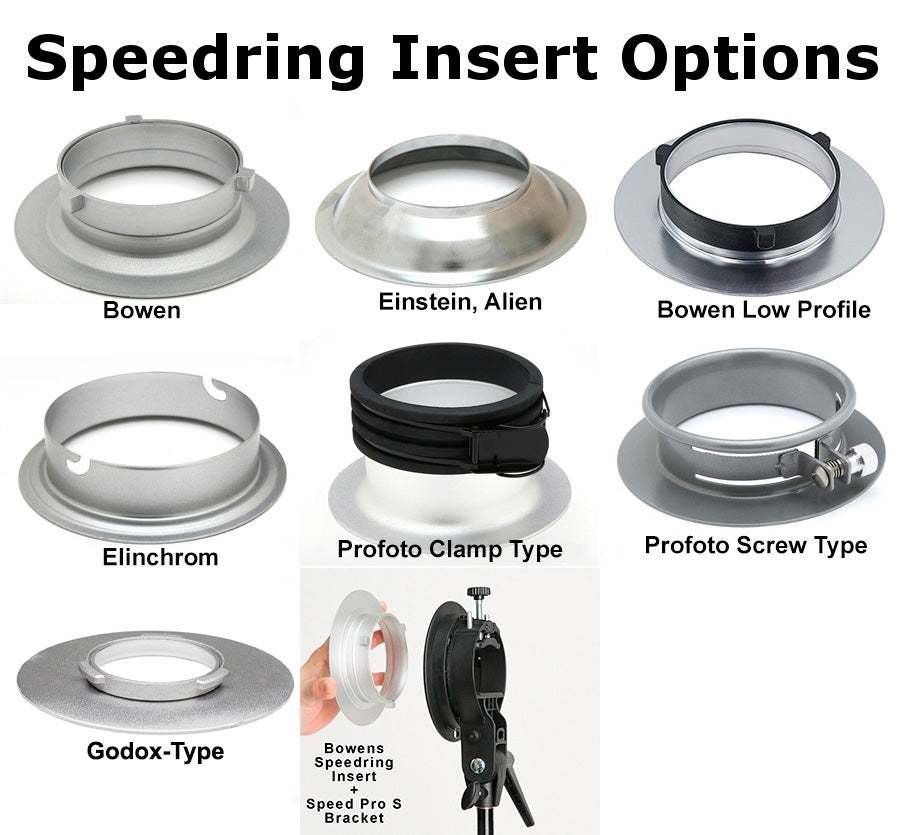
To use a Deep Parabolic Softbox effectively for your photography softbox setup, you'll need a few key pieces of equipment. Firstly, a light source: this can be a studio strobe (monolight), a speedlight, or a continuous LED light. Secondly, a light stand sturdy enough to support the softbox and your chosen light. Thirdly, and critically, you'll need a speed ring that is compatible with both your light's mount (e.g., Bowens, Elinchrom, Godox) and the Deep Parabolic Softbox itself. The speed ring is the adapter that connects the softbox to your light. Some softboxes may also come with a carrying bag for portability.
11. Can I easily interchange my Deep Parabolic Softbox between different brands of studio lights or continuous LEDs?
Yes, in most cases, you can easily interchange your Deep Parabolic Softbox between different brands of studio lights or continuous LEDs. The QPB-36 Softbox also has a port for the cable for constant lights. The key to this versatility lies in the interchangeable speed ring. Most Deep Parabolic Softboxes are designed to accept various types of speed rings, each tailored to fit specific light mounts (like Bowens S-Mount, Elinchrom, Profoto, etc.). So, if you switch from a Godox strobe to an Aputure LED, you generally only need to swap out the speed ring on your softbox rather than buying an entirely new softbox for light. Always double-check the speed ring compatibility before purchasing.
12. What are the key features I should look for when buying my first Deep Parabolic Softbox for light shaping?
When buying your first Deep Parabolic Softbox for light shaping, prioritize these features: 1. Robust Construction: Look for more durable fiberglass rods and high-quality, heat-resistant fabric. 2. Size: Consider your primary use (e.g., 90cm for headshots, 120cm for full-body). 3. Speed Ring Compatibility: Ensure it matches your light source's mount. 4. Included Accessories: Does it come with an Egg-Crate Grid or a sturdy carrying case? 5. Ease of Setup: Some models feature quick-release mechanisms, which are a huge plus for beginners. 6. Focusing Rod: If available, the unique aluminum focusing rod is a game-changer for versatility.
13. How does the light quality from a Deep Parabolic Softbox differ from a standard rectangular or strip softbox for softbox photography?
In softbox photography, the light quality from a Deep Parabolic Softbox is distinctly different from a standard rectangular or strip softbox. A rectangular softbox typically provides a broad, even spread of light, ideal for general fill or product shots requiring uniform illumination. Strip softboxes create a long, narrow beam, excellent for edge lighting or full-body separation. In contrast, a Deep Parabolic Softbox delivers a more focused, directional light with a faster, more dramatic light fall-off. This results in more pronounced, yet still soft, shadows and a richer, more sculpted look on your subject, adding significant depth and dimension that these other shapes cannot replicate.
14. What are the best practices for setting up and breaking down a Deep Parabolic Softbox to ensure its longevity?
To ensure the longevity of your Deep Parabolic Softbox, especially given its intricate design, follow these best practices for setup and breakdown. When setting up, ensure each of the more durable fiberglass rods is fully seated in its designated slot on the speed ring and in the softbox fabric. Apply even pressure when opening the softbox to avoid bending or stressing individual rods. For breakdown, use the release mechanism on the speed ring (if available) to relieve tension gradually, and always allow any hot lights to cool completely before packing. Store the softbox in its dedicated carrying bag to protect the fabric and rods from dust, dirt, and accidental damage during transport or storage.
15. Beyond basic portraits, what creative softbox photography applications are Deep Parabolic Softboxes excellent for?
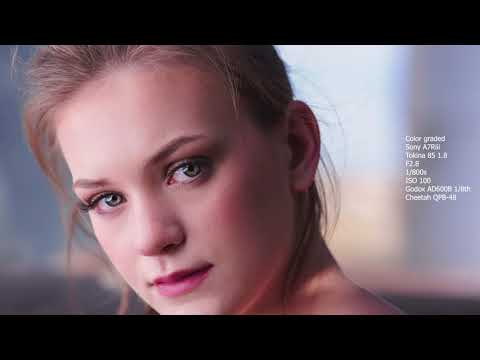
Beyond basic portraits, Deep Parabolic Softboxes excel in numerous creative softbox photography applications, thanks to their ability to create incredible shadow and rich lighting. They are superb for: Fashion and Beauty Photography: Creating dramatic highlights and contours that sculpt the face and body. Product Photography: Emphasizing textures and creating appealing dimensionality for luxury items. Fine Art Photography: Crafting moody and ethereal lighting that adds emotional depth to conceptual images. Edge Lighting/Hair Light: The focused beam from the unique aluminum focusing rod (especially with an Egg-Crate Grid) can create a stunning rim light or hair light, separating the subject from the background. Dramatic Storytelling: The interplay of light and shadow produced is ideal for creating compelling visual narratives with a strong sense of mood and atmosphere.
Question?
Answer
Question?
Answer
Question?
Answer
Question?
Answer
Question?
Answer
Question?
Answer
Question?
Answer
Question?
Answer
Question?
Answer
Question?
Answer
Question?
Answer
Ver todos los detalles